

Custom Industrials Companys (CIC) specializes in nut driver forging.
Closed Die Forgings
Closed die forging, also known as impression forging, utilizes pressure to compress the nut driver forging piece to fill an enclosed die impression. A medium frequency induction heating furnace is used to heat the metal to get the desired nut driver forging shapes. As the dies press together, the material is forced to fill the impressions, and the excess metal (flash) is squeezed out. Die forging is the best method to meet tolerances, and results in finished parts that are completely filled and produced with the least amount of flashing.
There are two main types of closed die forging.
Hammer Forgings
Hammer forging is the most common forging for nut driver forging individual forgings. In this method, the nut driver forging is shaped by an instantaneous application of pressure to a relatively small area. A hammer or ram delivers intermittent blows to the forged section, applying the necessary pressure. Multiple blows with different die shapes are typically used in succession to form nut driver forging in order to produce complex shapes. The hammers used are typically dropped from its maximum height, and usually raised by steam or air pressure.
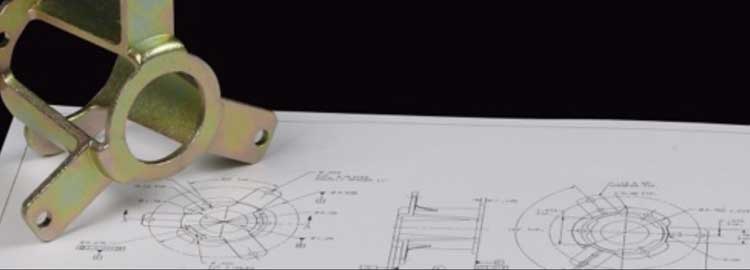
Hammer forging can produce nut driver forging in a variety of shapes and sizes, and if sufficiently reduced, it can simultaneously create a high degree of grain refinement. However, hammer forgings typically require tooling or dies to produce anything other than a simple shape such as a round or square forms.
Press Forgings
Somewhat less common is Press Forging is similar to kneading in which a slow and continuous pressure is applied to the forged area. The pressure extends deep into the material, and this process can be done cold or hot. Cold press forging is used on thin, annealed nut driver forging, while hot press forging is used on large work such as armor plating, locomotives, and heavy machinery. Press forging offers economic advantages as closer tolerances can be obtained thus less secondary work is needed to produce a finished part to proper tolerances. This method can also be used to create larger nut driver forging forgings.
Finish Machining
Finish machining often accompanies many nut driver forging, as close dimensional tolerances cannot be obtained with many of the forging processes.
In addition to nut driver forging we also provide castings, metal forming, plastics & rubber, and other industrial solutions.
Your nut driver forging Solution:
Custom Industrials Company (CIC) is able to handle all your nut driver forging needs.
We are focused on delivering quality nut driver forging and customized manufacturing parts or products, which comprise of Metal and Plastic components.
Contact us for your no cost nut driver forging consultation now.