
CIC specializes in Alternator Housing Castings.
We provide all types of alternator housing castings, which is a process where molten metal is injected at high pressure or poured into a mold containing a hollow cavity the shape of the part to form an object to a desired shape. The solidified part is known as a casting which is broken out or ejected from the mold to complete the process. Casting is most often used for making complex shapes that would otherwise be difficult or cost prohibitive to produce by other methods.
The cast metal part is removed from the mold either by injection or destruction of the mold.
Most common castings alloys can be cast using expendable molds. Reusable molds depend on the alloy melting points. If the melting point of the alloy is higher than the mold melting point, then reusable molds are not an option.
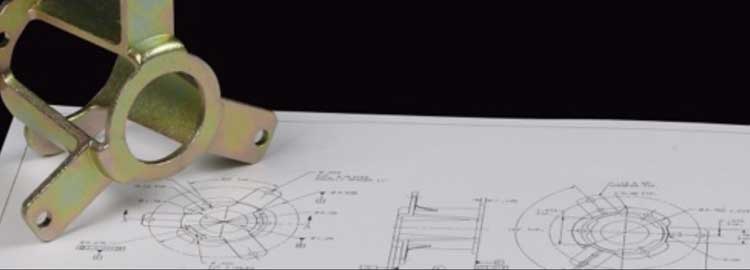
To complete the process after the alternator housing castings parts are cooled, gating is removed and then they are typically ground and cleaned, and machined if necessary, to produce a semi-finished or finished part.
Benefits of Alternator Housing Castings
- The alternator housing castings shapes that can be produced are almost limitless.
- With the correct alternator housing castings design and process many parts can be combined into a single part &emdash; helping reduce costs by reducing or eliminating machining, by providing assembly, as well as by reducing the number of components in inventory and other associated costs.
- Design flexibility. Castings allow you to choose from many alloys as well as have flexibility for internal and external configurations to suit your particular needs. Net shape production is sometimes achievable so that the parts are usable as cast. However, to achieve many close tolerances, threads, or surface finishes machining is required. CIC can help minimize the need for expensive secondary operations by choosing an optimal casting process.
- Elimination of material waste. alternator housing castings are cast to size.
- The alternator housing castings is usually the most cost-effective method to produce complex or large parts for prototype quantities to medium and high-volume quantities.
The casting process may vary based on production volume and casting tolerance capability of the process. CIC helps their customers “engineer savings” by providing cost effective alternator housing castings design solutions, sourcing and warehousing.
CIC provides cost efficient die castings, semisolid castings, shell castings, permanent mold castings, sand castings, investment castings, centrifugal castings and prototype castings.
Each casting type and alloy has pros and cons regarding cost, volume production, metallurgical quality, dimensions held, reliability and competitiveness.
Casting characteristics to consider include cost, strength, hardness, density weight limitations, bearing qualities, if needed including galling resistance, machinability, weldability, brazabilty, abrasion resistance, corrosion resistance, oxidation resistance, fatigue properties, resistance to cracking, electrical conductivity, magnetic properties, thermal conductivity and other engineering or technical attributes.
Working with CIC ensures that all of your alternator housing castings requirements are considered for your application.
CIC’s alternator housing castings consulting, quality component manufacturing, supply chain management and warehousing options exceed industry standards and provide the best overall value and savings.
CIC supplies many special casting alloys as well as many more common alloys as listed below, including aluminum, magnesium, beryllium copper, nickel, titanium, refractory metals, gray iron, ductile iron, carbon steel, alloy steels and stainless steel as well as other less common alloys.
- Aluminum: A360, A380, A356, A319, Tenzalloy, A713, A413, A319
- Brass/Bronze: C95200, C95400, C95500, C95800, C90800, C93200 (SAE 660), C83600, C84400, C83400
- Iron: Class 30 Gray Iron, 65-45-12, 80-55–06, 100-70-03 Ductile Iron, A532 Abrasion Resistant, Austenitic Ductile Iron (ADI), Magnesium: AZ91
- Nickel: Inconel, Hastelloy, Monel
- Stainless Steel: CF8 (304), CF3 (304L), CK20 (310), CF8M (316), CF3M (316L), A297 Heat Resistant, A351 Corrosion Resistant, 17-4PH, 15-5PH, Duplex, CA15 (410)
- Steel: 4340, 8620, WCB, WCC, LCB, CA6NM, 1020, 1030, 1040
- Titanium: Ti-6Al-4V
- Zinc: Zamak 3, 5, 7, ZA8, ZA12
CIC provides alternator housing castings and other types of castings for a wide range of industrial OEMs including transport (railway, shipping, aircraft and aerospace), heavy equipment (construction, mining, farming), plant machinery (paper, petroleum, food), hardware, defense (munitions, vehicles, supporting equipment), and household (appliances, gardening equipment, furniture, fittings), machine tools, electrical machines (motors, generators, pumps, compressors), municipal (pipes, joints, valves, fittings), industries.
CIC provides alternator housing castings in Missouri, Illinois, Kentucky, Tennessee, Arkansas, Kansas, Nebraska, Iowa, Oklahoma as well as many other major manufacturing areas in North America.
Contact us for your alternator housing castings requirements, or consultation and quotation now!
Review our casting types including alternator housing castings.
Products & services offerings including alternator housing castings.
In addition to alternator housing castings CIC offers forgings, metal forming, plastics and other component manufacturing, supply chain management and warehousing.
Our mission statement supports our commitment to alternator housing castings production quality.
Unsure about your product needs? Call and ask us about alternator housing castings castings and we’ll clear up any uncertainty.